|
| |
| |
| Cultivated and modern verities, climate change, urbanization, desertification, and many other factors are accelerating the distinction of large number of landraces and wild relatives of major crops of great importance to the global food security. In the past 40 years, ICARDA-GRS in collaboration with national programmes, CG centers, and international organizations successfully conducted more than 215 collecting missions in 37 countries.
read more... |
| | 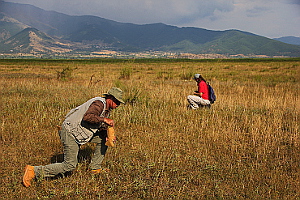 | | Ali Shehadeh and Athanasios Tsivelikas collecting at the buffer zone of a protected area in Greece, August 2013 |
|
|
| |
| |
| The genebank contains more than 140,000 accessions of barley, wheat, food legumes (lentil, chickpea and faba bean) and feed legumes (vetch and grass pea), and other drylands species. Each accession is divided into two sets and stored in different condition for different purposes. First batch is for long term conservation "base collection", in a -20 Cο cold rooms, and a second batch for medium term conservation "active collection" under -4 Cο temperature.
read more... |
| | 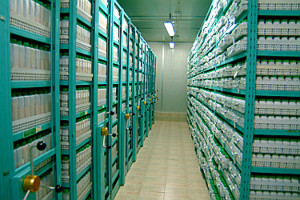 | | The active collection cold room (-4 cο), one of the two cold rooms at the genebank, ICARDA's HQ, Tel Hadia, Aleppo |
|
|
| |
| |
| A backup copy of ICARDA's genebank of 98% of the conserved material is already sent to other reliable genebanks around the world as a standard precaution procedure to any catastrophic situation that might impose threats "e.g. natural disasters" of losing this invaluable world's heritage. A second copy, of ICARDA's mandate crops are sent to Svalbard seed vault, the world's long term storage facility, build inside a mountain on an island half way between Norway and the North Pole.
read more... |
| | 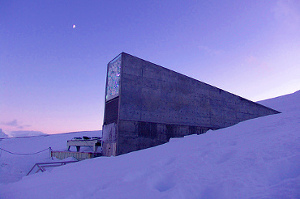 | | Svalbard Global Seed Vault, 100 million seeds and more to come, remote island in the Arctic Circle, Norway |
|
|
| |
| |
| Every season our genebank curators perform number of tasks to guaranty the quality and availability of seeds: viability testing, regeneration, multiplication, taxonomic identification, characterization, basic evaluation, and seed health testing. All procedures are following global genebank standards develop by FAO in collaboration with scientists from around the world
read more... |
| |  | | ICARDA fields where the genebank seasonal plantation, HQ - Tel Hadia, Aleppo. |
|
|
| |
| |
| ICARDA-GRS sends out accessions to any user from any country, free of charge, upon request and signing the Standard Material Transfer Agreement (SMTA). ICARDA-GRS sent more than 881,000 samples since its establishment to users from more than 85 countries, for different purposes such as: research breeding, repatriation, stresses screening, etc.
read more... |
| | 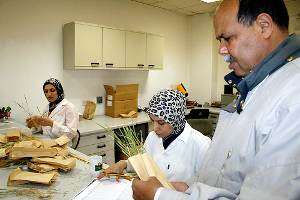 | | Preparation and packing of seeds for distribution, GRS labs at the HQ -Tel Hadia, Aleppo. |
|
|
| |
| |
| Exploring the potential of the collection for crop improvement by: phenotyping, genotyping, and developing the methodology to mine the collection for sought adaptive traits (FIGS approach), to efficiently respond to users requests. Performing gap analysis, to fill any geographical gaps, or underrepresented species in the collection; giving the priority to areas that will have a greater impact by climate changes.
read more... |
| | 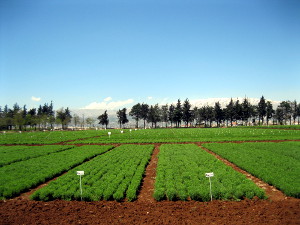 | | Regeneration trials at ICARDA's research station, Beka'a Valley, Terbol , Lebanon 2013. |
|
|
| |
| |
| Documentation is in every day-to-day work and in every activity at ICARDA-GRS, it accompany the accession through its life cycle from collecting to storage and even beyond its distribution. ICARDA-GRS database is the of information to report to international bodies such as: the CGIAR Consortium, the Global Crop Diversity Trust, and the International Treaty on Plant Genetic Resources for Food and Agriculture. GRS database combined with data from other CG Centers is also published on global portals such as SINGER and Genesys to enable users to search of material of their interest and request it online
read more... |
| | 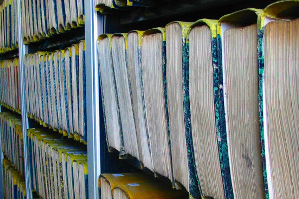 | | Documentaion of genetic resources is a continues process, strating form the field collecting forms, today we do it with tablet PCs. |
|
|
| |
| |
Raising public awareness of stakeholders and decision makers about the importance of conserving and use of genetic resources, and the related international conventions and their implications on polices and legislations to achieve that goal, and explaining the consequences of no action, on the global food security; especially with the expected increase of world's population and the threat imposed by climate change.
read more... |
| | 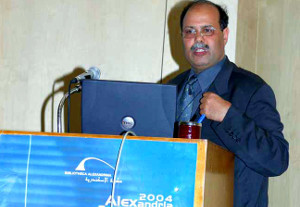 | | Ahmed Amri advocating the importance of genetic resource for food security at bioVision conference. Bibliotheca Alexandrina, Egypt 2004. |
|
|
| |
| |
Few courses are organized every year on regional level or in-country to provide nationals with the needed skills for various activities such as: Best practices for ex situ conservation, documentation and information management, Policy and legislation, Use of GIS/RS tools for assessing agro-biodiversity and land use, and many other topics related to genetic resources conservation and sustainable use.
read more... |
| | 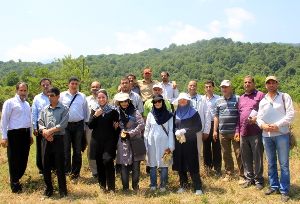 | | Regional training course on genebank best practises, Karaj, Iran, June 2012. |
|